
Vinyl Fencing
Durable Fencing That Requires No Seasonal Refinishing
Residential vinyl fencing from COMMON FENCE FENCING CO stays intact through heat and wind without the upkeep demands of wood in Menifee & Corona, CA.
COMMON FENCE FENCING CO installs residential vinyl fencing for homeowners who want perimeter definition, privacy, or decorative borders without ongoing paint or stain schedules. You need this when wood fencing has warped, split, or faded and you want a replacement that holds color and form through temperature swings and direct sun exposure. The work involves setting reinforced vinyl posts in concrete footings, attaching horizontal rails with routed channels, and sliding tongue-and-groove panels or pickets into the framework.
This service addresses situations where moisture, UV exposure, or insect activity has degraded wood fencing faster than expected. Vinyl does not absorb water, so panels will not swell, rot, or develop mold even when irrigation systems spray directly onto the fence line. Posts include internal aluminum channels when the fence must resist wind loads or support gate hardware.
If your current fence leans, has missing boards, or requires scraping and painting every few years, request a consultation to review vinyl styles and layout options for your property in Menifee or Corona, CA.
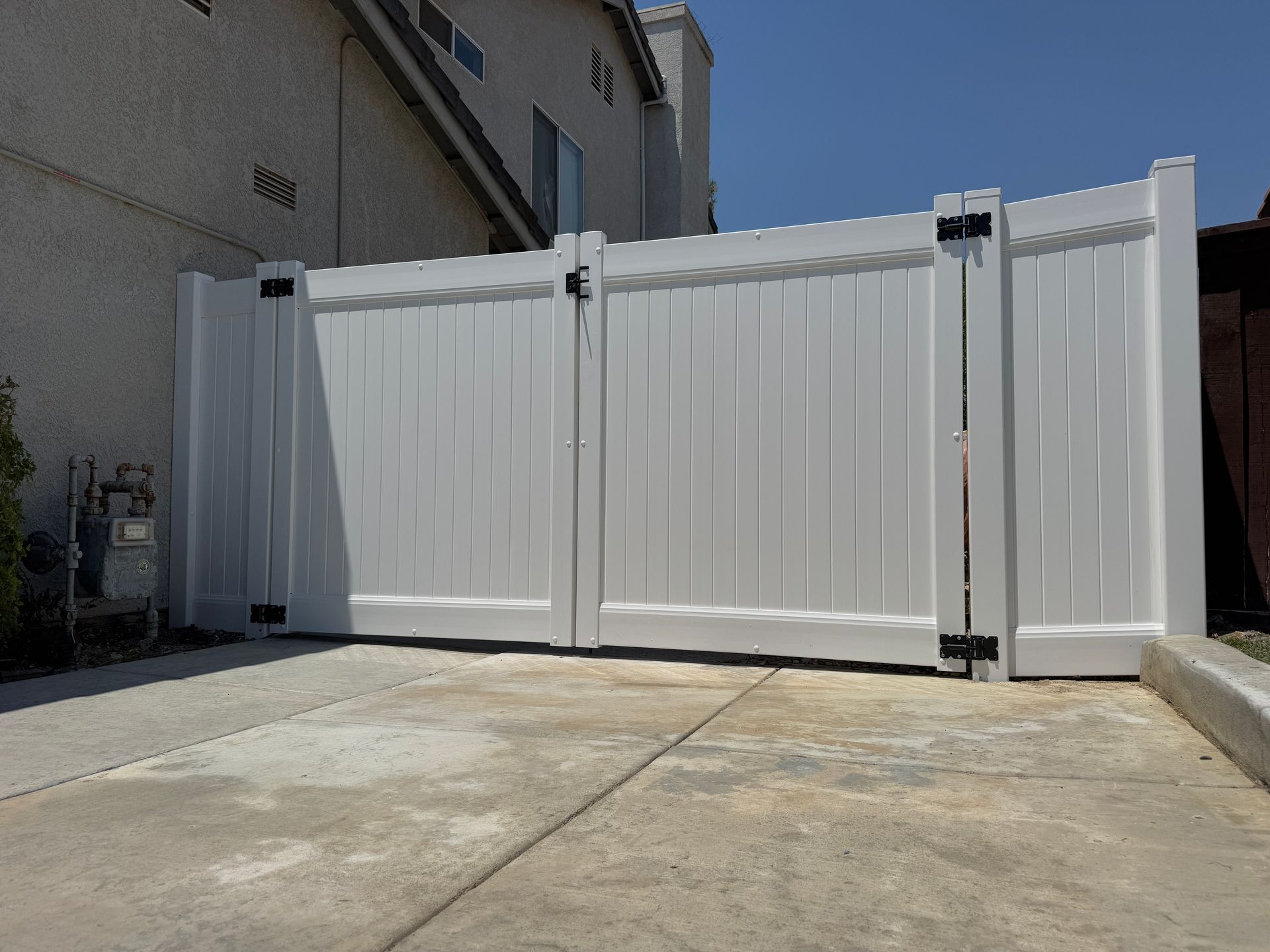
You will notice that the fence line is uniform in color and alignment, with no visible nails, screws, or hardware on the street-facing side. Each post is plumbed vertically and set in a concrete footing that extends below frost depth to prevent heaving. Rails lock into routed post channels, and panels slide into the rail grooves without gaps that expand over time.
After installation by COMMON FENCE FENCING CO, the vinyl surface can be rinsed with a garden hose to remove dust, pollen, or soil splatter. You will also see that gate frames include diagonal cross-bracing and heavy-duty hinges rated for repeated daily use. The fence does not need sealing, and the color is molded into the material rather than applied as a coating.
The system does not include post caps unless specified, and decorative lattice or scalloped tops are optional additions. If the fence runs along a slope, posts are stepped to keep panels vertical rather than angled. If privacy is a priority, panels are installed with no spacing between pickets.
What You See After Vinyl Fencing Replaces Wood
Common Questions About Vinyl Fencing Installations
Homeowners often ask these questions before committing to vinyl.
What colors are available?
White, tan, and gray are the most common, with the pigment mixed throughout the vinyl rather than applied as a surface layer. The color will not fade significantly even with years of sun exposure.
How are the posts anchored?
Each post is set in an augered hole filled with concrete. The footing extends at least twenty-four inches deep, or deeper in sandy soil, to resist wind loads and lateral movement.
When does vinyl crack or break?
Impact damage is rare but can occur if struck by vehicles or heavy equipment. Individual panels and posts can be replaced without dismantling the entire fence section.
Why does vinyl cost more upfront than wood?
The material is more expensive, but you avoid the recurring costs of stain, paint, and board replacement. Over ten years, total cost is often lower than maintaining a wood fence in Corona and Menifee's climate.
What maintenance does vinyl require?
Periodic rinsing with water removes surface dirt. Stubborn stains from mud or algae can be scrubbed with a soft brush and mild detergent.
COMMON FENCE FENCING CO helps homeowners in Menifee and Corona, CA, select panel styles, post spacing, and gate configurations that match both functional needs and property aesthetics. Reach out to discuss material options and get a detailed scope of work before installation is scheduled.